
Study in Finland (2025): Your Complete Guide for Bachelor & Master Applicants from Pakistan and India
About Finland
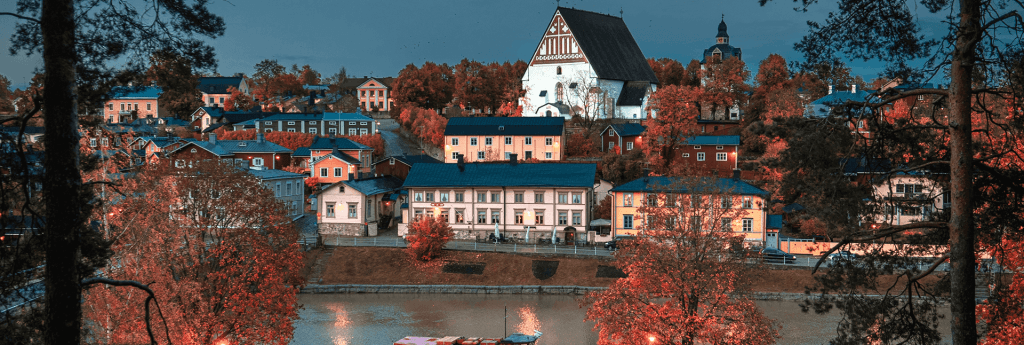
Finland consistently ranks among the world’s top countries for education quality, social trust, safety, and digital innovation. For decades, the Finnish model has emphasized research-driven instruction, student wellbeing, and practical learning—values you’ll feel the moment you step on campus. English-taught degrees are widely available at both research universities and universities of applied sciences (UAS), making it straightforward to study in Finland without prior Finnish language ability. Degrees are internationally recognized under the Bologna system (Bachelor 180–240 ECTS; Master 60–120 ECTS), and campuses are technology-rich, student-centric, and tightly connected to industry.
For international students eyeing bachelor Finland or masters in Finland, the eco-friendly lifestyle, transparent governance, and strong startup scene (think games, clean tech, AI, photonics) create an environment where you can thrive academically and professionally. Public transport is reliable, student discounts are generous, and many campuses provide dedicated career services and incubators. Whether your goal is research, entrepreneurship, or an industry career, Finland universities for international students offer a calm, collaborative setting to build skills that travel anywhere.

Free Consultation.
Let’s Start Your Journey.!
Facts & Figures about Higher Education in Finland
- Two types of institutions: Research Universities (science/research focus) and Universities of Applied Sciences—UAS (professional & practice-oriented). Most study in Finland options in English appear in both streams.
- English-taught programmes: Extensive catalogues of Bachelor’s and Master’s programmes taught in English are published centrally on Studyinfo (Finland’s official portal).
- Application system: Most English-taught Bachelor’s (and many Master’s) use the Joint Application; some Master’s use Separate Applications.
- New application fee (2025): Non-EU/EEA/Swiss applicants pay an application fee (due within 7 days) for Bachelor’s and Master’s applications. (See “Costs & Fees” below).
- Right to work while studying: With a student residence permit, you can work on average 30 hours/week across the year; full-time during holidays, provided the annual average stays at 30 h/week.
- Financial requirement for visa (bank statement): €800/month; for a full academic year, show €9,600 (plus enough to cover any tuition still unpaid).

Top Finland Universities Providing Education in English
Below are prominent Finland universities for international students offering many English-taught options. (You can search all programmes centrally on Studyinfo.)
- University of Helsinki – Finland’s highest-ranked research university; broad English-taught Master’s in Finland. portfolio. Website
- Aalto University – Strong in engineering, design, business; many English-taught Master’s with defined tuition levels and scholarships. Website
- Tampere University – Tech, health, society; Bachelors/Masters €10k–€12k range. Website
- University of Oulu, University of Turku, University of Eastern Finland (UEF) – Broad STEM/health/social sciences options in English (see Studyinfo listings). Website
- LUT University, Åbo Akademi University, Hanken School of Economics – STEM, business, and niche specializations in English (tuition varies by programme; see fee section).
- Universities of Applied Sciences (UAS) such as Metropolia, Haaga-Helia, TAMK (Tampere UAS) – career-focused programmes in business, IT, engineering, hospitality.
How to Study in Finland: Step-by-Step Admissions Guide (with official resources)
Step 1 — Explore programmes
Start at Studyinfo (opintopolku.fi) to filter Bachelor’s/Bachelor Finland and Masters in Finland taught in English. Save favourites and read each page carefully for eligibility and selection methods.
Step 2 — Check how to apply (Joint vs Separate)
Most English-taught Bachelor’s use Joint Application; (A joint application in Finland allows you to apply to up to six different university degree programs (bachelor’s or master’s) with a single application form on the Studyinfo.fi portal during a designated period) many Master’s also participate, while others use Separate Applications (own timeline).
Step 3 — Understand eligibility
- Bachelor’s: Generally eligible if you qualify for higher education in your home country; also IB/EB/RP/DIA and certain Finnish qualifications accepted.
- UAS Master’s: Bachelor + typically 2 years’ post-degree work experience (some arts fields accept artistic merits).
- University Master’s: Bachelor in a relevant field (by the university’s stated deadline).
Step 4 — Language requirements
Each programme sets its English-language proof options (commonly IELTS/TOEFL/PTE; some may accept alternative proofs). Always check the programme page.
IELTS Academic overall of 6.0-6.5, a TOEFL iBT overall of 79-92, and a PTE Academic overall of 59-62
Step 5 — Prepare documents and apply
Complete the online application on Studyinfo during the application window. From 1 Jan 2026, non-EU/EEA/Swiss applicants must pay an application fee within 7 days of applying; otherwise the application won’t be processed.
Step 6 — Follow institution-specific selection
Universities/UAS evaluate via prior grades, entrance exams, portfolios, interviews, or SAT/GMAT/GRE (varies). Contact the programme’s admissions if unsure (Studyinfo lists contacts).
Step 7 — Accept the offer & confirm your place
Offers and deadlines are stated by each application round; read your decision letter carefully for tuition deposit and confirmation steps. (Studyinfo posts key dates per round.)
Step 8 — Apply for Residence Permit for Studies (D-visa + permit where applicable)
Use Enter Finland and book biometrics. You must prove funds: €800/month (e.g., €9,600/year) plus funds for any unpaid tuition.
When to Apply (2025 cycles)
- Main January 2026 Joint Application: Jan 8–22, 2025 for English-taught degrees starting autumn 2025.
- Autumn (September) 2025 Joint Application: Sep 1–11, 2025 (smaller selection; mostly UAS).
Some Master’s use Separate Applications with programme-specific dates—always confirm on Studyinfo/programme pages
Admission Requirements (Summary)
- Bachelor Finland: Secondary qualification that grants university access in your home country (or IB/EB etc.); English proof; programme-specific criteria and selection tests where applicable.
- Masters in Finland (University): Relevant Bachelor; English proof; programme-specific criteria.
- Masters in Finland (UAS): Bachelor + 2 years’ post-degree work experience (with named exceptions in arts).
- Application fee (2025): Pay within 7 days of application; otherwise your application is not processed. Exemptions exist (e.g., EU/EEA/CH) and certain special cases
Costs & Fees (Tuition, Application Fee, Living)
Tuition fee ranges (illustrative official figures)
- Aalto University (Master’s, 2025 study rights): Business €15,000/year; technology/design fields higher on some programmes (see table).
- Tampere University (Bachelor & Master in English): €10,000–€12,000/year.
- University of Helsinki (Master’s): many programmes in the €13,000–€18,000 band (programme-specific).
Actual tuition depends on programme and faculty. Always verify the exact fee on the programme’s own page.
New Application Fee (from 1 Jan 2025)
- Non-EU/EEA/Swiss applicants pay an application fee for Bachelor’s/Master’s, payable within 7 days of submitting the application.
- Studyinfo details the payment window, accepted payment methods (Visa/Mastercard/Apple Pay/Google Pay), and that applications aren’t processed without timely payment.
Living costs / “Bank statement” for Residence Permit
- Minimum funds: €800/month (→ €9,600 for a 12-month period) plus enough to cover any unpaid tuition at the time of applying for the permit.
- Study in Finland also recommends budgeting €900–€1,000/month for realistic living.
Can Students Work While Studying?
Yes. With a student residence permit, you may work an average of 30 hours/week across the calendar year, with flexibility to exceed in some weeks if the annual average remains 30. Full-time is allowed during holiday periods (still respecting the annual average).
Where do students commonly work?
International students (especially newcomers from Pakistan/India) often start with roles that do not require fluent Finnish: campus assistant, research/teaching support, QA/testing, IT helpdesk, restaurant/kitchen, logistics/warehouse, retail associate, housekeeping, delivery/rider, seasonal tourism (Lapland/winter). Check Work in Finland and Job Market Finland portals for openings.
For seasonal roles (summer tourism, berry farms, winter resorts), Job Market Finland provides guidance.
Scholarships (2025): What’s Available for Pakistani/Indian Students?
- University scholarships/tuition waivers: Almost all Finland universities for international students offer tuition-fee waivers and merit-based scholarships for non-EU/EEA students. These are advertised on each university’s page and on Study in Finland’s funding overview.
- Programme-specific awards/early-bird discounts: Many faculties (e.g., Tampere) offer partial waivers/early-bird discounts for timely payers.
- “Finland Scholarship” packages (first-year focus): Some universities advertise “Finland Scholarship” packages (often a tuition waiver + up to ~€5,000 first-year grant). Terms differ by university and are subject to change; verify on the target programme’s scholarship page.
- References to check scholarships:
- Study in Finland – Fees & Scholarships overview.
- University pages (Aalto scholarships; Tampere fees & scholarships; University of Helsinki scholarships).
Note: Finland does not run a central, fully-funded government scholarship for all Bachelor/Master applicants; funding is primarily by universities. Always read the fine print on coverage (tuition vs. living) and renewal conditions.
Is a Bank Statement Required for Visa or Admission? How Much?
- For the residence permit (visa) application: Yes. You must prove funds of €800/month (i.e., €9,600 for one year) plus money for any unpaid tuition. Evidence is typically a personal bank statement, scholarship letter, or institutional support letter.
- For university admission: Universities usually do not require a bank statement to issue an admission offer, but they may ask for tuition payment (or deposit) to confirm your study place. Always follow the programme’s instructions.
Fee Structure (Typical Annual Ranges)
| Degree Level | Typical Range (non-EU/EEA) | Examples / Notes |
|---|---|---|
| Bachelor Finland (English-taught) | €8,000–€12,000 at many UAS; some research-university bachelor tracks may be higher | TAMK (UAS) indicates €8,000–€12,000 depending on programme. |
| Masters in Finland (University) | €10,000–€18,000+ | Tampere: €10k–€12k; University of Helsinki many programmes in €13k–€18k; Aalto: faculty-based fees e.g., Business €15k (2025). |
Step-by-Step: Getting Your Finland Student Residence Permit (after admission)
- Secure your study place and (if required) pay the tuition deposit by the university deadline.
- Collect documents: acceptance letter, passport, proof of funds (≥ €9,600 for 12 months + any unpaid tuition), health insurance, tuition receipt if paid.
- Apply online via Enter Finland → choose Residence permit for studies. Upload all documents and pay the fee.
- Book biometrics at the nearest Finland visa/permit center (VFS Global) and attend with originals.
- Wait for a decision; respond promptly to any requests. Track your application in Enter Finland.
- After approval: collect your residence permit card (and D-visa if issued for faster entry), arrange travel, and plan your arrival.
Your First Month in Finland: Practical Checklist
- Register with authorities (DVV): Submit the DVV online form and verify your identity within one month to register your personal data/municipality (if eligible).
- Student Union & Student Card (Frank App): Join your student union to access canteen/transport discounts; activate the Frank digital card.
- Open a bank account and obtain online banking credentials—widely used for secure logins in Finland.
- Tax card (if working): Apply to the Finnish Tax Administration before starting any paid job.
- Health & wellbeing: Follow your university’s orientation schedule and health guidance; degree students typically access student healthcare through their institution.
- Housing & transport: Finalize housing contract, get a HSL/JL ticket (city transport) student discount once your student status is active.
- Language & networking: Enrol in beginner Finnish/Swedish classes; join student clubs and career services to start building your network. (Universities publish post-arrival checklists.)
What Jobs Can Pakistani/Indian Students Get Easily?
While study in Finland for international students starts with academics, many find part-time roles that build local experience:
- On-campus: research/teaching assistant, lab support, IT helpdesk. (Check your university’s internal jobs board.)
- Tech & digital: QA/testing, junior support, data annotation—especially in Helsinki/Tampere/Oulu.
- Services: retail, cafés/kitchens, delivery/warehouse, cleaning.
- Seasonal: tourism in Lapland (winter), events/hospitality, berry farms (summer).
- Search on Work in Finland and Job Market Finland, and set alerts early.
University Websites (quick list)
University of Helsinki: https://www.helsinki.fi/en
Aalto University: https://www.aalto.fi/en
Tampere University: https://www.tuni.fi/en
LUT University: https://www.lut.fi/en
University of Oulu: https://www.oulu.fi/en
University of Turku: https://www.utu.fi/en
University of Eastern Finland: https://www.uef.fi/en
Metropolia UAS: https://www.metropolia.fi/en
Haaga-Helia UAS: https://www.haaga-helia.fi/en
Tampere University of Applied Sciences (TAMK): https://www.tuni.fi/tamk/en
Studyinfo (official programme search): https://opintopolku.fi/konfo/en
Study in Finland (official info hub): https://www.studyinfinland.fi/
Frequently Asked Questions (FAQ)
- Is IELTS mandatory?
Not universally. Each programme defines accepted proofs of English (IELTS/TOEFL/PTE or other options). Check the specific Studyinfo entry for your programme. - 2) What’s the 2025 application fee and deadline?
From 1 Jan 2025 a non-EU/EEA/Swiss applicant pays an application fee that must be paid within 7 days of submission. Applications are not processed without timely payment. - 3) How much money must I show for the residence permit?
At least €800/month → €9,600/year, plus enough to cover any unpaid tuition. - 4) Can I work part-time while studying?
Yes—average 30 hours/week across the year; full-time during holidays as long as your annual average is 30 h/week. - 5) Are scholarships available for Pakistani students?
Yes—university scholarships/tuition waivers are the primary route. Check each programme’s page and the Study in Finland funding overview. Some universities also advertise “Finland Scholarship” style first-year packages; availability/terms vary. - 6) When are the 2025 application windows?
Jan 8–22, 2025 (main joint application), and Sep 1–11, 2025 (smaller autumn round). Programmes using Separate Applications may have their own dates. - 7) Do I need Finnish language?
Not for admission to English-taught degrees. For jobs and long-term careers, Finnish helps a lot; plan to study the basics in your first semester. - 8) How long are degrees?
Bachelors: typically 3–4.5 years; Masters: 1–2 years full-time.