Career Guidance for Enhancing Your Expertise
Aligning Different Educational Backgrounds with Modern AI
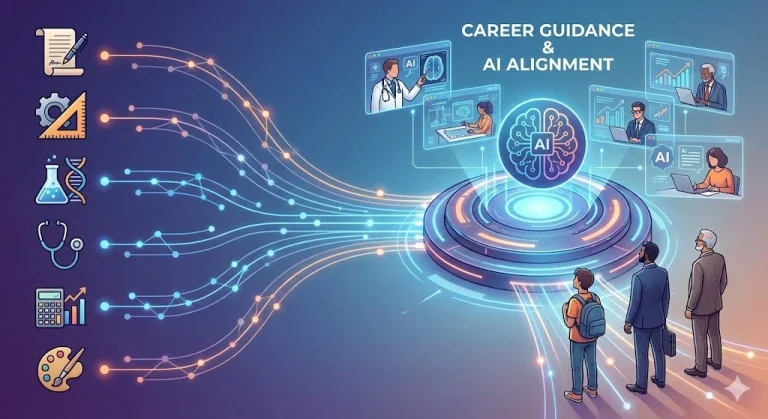
Introduction: The Changing World of Work.
The world of work is evolving at a pace we’ve never seen before. Technology, globalization, and shifting social needs are reshaping industries, and at the center of this transformation is Artificial Intelligence (AI). For many, AI sparks mixed emotions: excitement, curiosity, and sometimes fear. Will it replace jobs? Or will it create new opportunities?
The truth is simple: AI is a tool. Like any tool, its value depends on the person using it. A hammer can build a house or break a window; AI can automate tasks or empower creativity. The difference lies in how we choose to integrate it into our lives and careers.
This article is designed to help students, professionals, and educators understand how to align their educational backgrounds with AI to future-proof their careers. Whether you’re in high school deciding your next step, a college student exploring majors, or a professional seeking relevance in a digital-first world, this guide will show you how to layer AI proficiency on top of your existing expertise.
Why “Career 2.0” Must Include AI
In the past, career guidance was about choosing between streams—Science, Commerce, or Arts. Today, those boundaries are blurring. The modern workforce demands a blend of technical adaptability and uniquely human skills.
AI literacy is no longer optional. Just as reading and writing became universal skills in the industrial age, understanding AI is becoming a baseline competency in the digital age. You don’t need to be a programmer, but you do need to know what AI can and cannot do, how it affects your field, and how to use it responsibly.
Think of AI as electricity. At first, only engineers understood it. Today, everyone uses it without thinking. AI is on the same trajectory—it’s becoming embedded in every profession, from art to medicine.
Aligning Your Expertise: How Different Fields Can Use AI
Creative Arts & Humanities
Artists, writers, and designers often worry about AI tools like image generators or writing bots. But here’s the reality: AI doesn’t replace creativity—it amplifies it.
- AI as a collaborator: Use AI to generate drafts, outlines, or mood boards. This frees you to focus on the emotional depth and originality that machines can’t replicate.
- Career tip: Learn the art of “prompting.” The better you communicate with AI, the better results you’ll get. Your creativity sets the vision; AI provides the speed.
Example: A filmmaker can use AI to storyboard scenes quickly, but the emotional storytelling still comes from human imagination.
Business & Commerce
In finance, management, and entrepreneurship, AI is the ultimate analyst. It can process massive datasets in seconds, revealing insights that would take humans weeks.
- AI as a decision-support tool: It can forecast market trends, analyze consumer behavior, and optimize supply chains.
- Human edge: AI cannot negotiate deals with empathy, make ethical judgment calls, or inspire teams. That’s where human leadership shines.
- Career tip: Focus on interpreting AI-generated data and turning it into strategic, ethical business decisions.
Example: A marketing manager can use AI to analyze customer preferences but must decide how to craft campaigns that resonate emotionally.
STEM & Healthcare
STEM and healthcare are fields where AI is most transformative—but also most demanding.
- AI in healthcare: It can diagnose diseases, predict patient risks, and personalize treatments. Yet, doctors must ensure ethical oversight and patient trust.
- AI in engineering: It can simulate structural designs or predict failures, but engineers must validate results and ensure safety.
- Career tip: Combine technical expertise with ethical responsibility. AI literacy here means not just using tools but questioning them.
Example: A civil engineer might use AI to model earthquake-resistant buildings, but human judgment ensures the design meets safety standards.
Career Guidance for Students: After 10th and 12th
After 10th: The First Crossroads
Traditionally, students ask: “Science, Commerce, or Humanities?” But the better question today is: “Where can I apply data logic?”
- If you choose Humanities, consider side courses in Data Science or Digital Media.
- If you choose Science, explore AI ethics and responsible innovation.
- If you choose Commerce, learn how AI is reshaping finance and management.
After 12th: Building Interdisciplinary Skills
College choices should reflect the future’s demand for hybrid expertise.
- Psychology + Machine Learning = careers in counseling, UX research, or behavioral analytics.
- Biology + AI = careers in biotech, personalized medicine, or environmental science.
- Economics + Data Science = careers in policy-making, financial analysis, or global trade.
If you’re unsure, online career tests that measure digital aptitude can help you discover where your natural interests align with future opportunities.
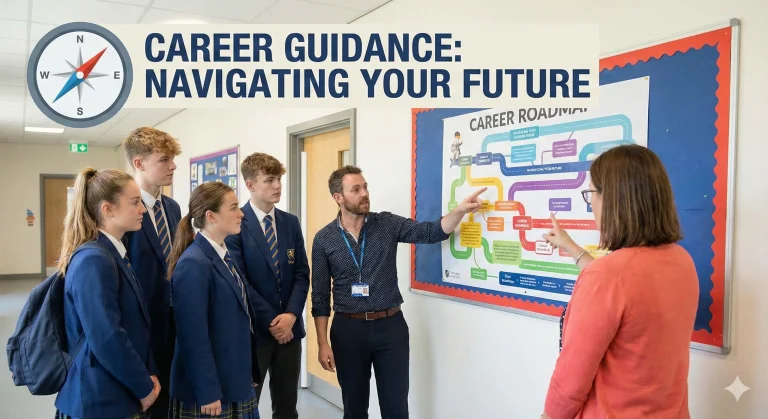
The Role of Guidance Counselors in the AI Era
Guidance counselors are more important than ever. Their role has shifted from simply helping students pick subjects to guiding them through the psychological impact of automation anxiety.
- Human-AI Collaboration: Counselors must teach students how to work with AI, not against it.
- Resilience building: Counseling now involves preparing individuals to adapt, re-skill, and embrace lifelong learning.
- Career coaching: Counselors help clients see AI as an ally, not a competitor.
Example: A school counselor might guide a student interested in literature toward combining creative writing with AI-driven publishing tools.
Actionable Tips to Future-Proof Your Career
Here’s a practical checklist to keep your career relevant in the AI era:
- Develop AI Literacy: You don’t need to code, but you should understand AI’s strengths and limitations.
- Focus on Human Skills: Empathy, ethics, and complex problem-solving remain uniquely human.
- Seek Professional Guidance: Career coaches can tailor advice to your background and aspirations.
- Network Strategically: Connect with professionals who understand both your field and the tech landscape.
- Stay Curious: Lifelong learning is the new norm. Keep exploring new tools, courses, and opportunities.
Real-Life Examples of AI Integration
- Education: Teachers use AI to personalize learning, but they still provide mentorship and emotional support.
- Law: Lawyers use AI to scan legal documents, but human judgment decides arguments in court.
- Agriculture: Farmers use AI to predict crop yields, but they rely on experience to manage unpredictable weather.
- Entertainment: Musicians use AI to generate beats, but human creativity shapes the final song.
These examples show that AI doesn’t eliminate jobs—it changes them. The winners will be those who adapt.
Conclusion: Your Career, Your Choice
Your career isn’t defined by what you studied five years ago it’s defined by how you learn today. The best career for you is one where your unique human expertise directs the raw power of AI.
So stop worrying about AI taking your job. Instead, start learning how AI can help you do your job better. Whether you’re a student choosing subjects, a professional seeking relevance, or a counselor guiding others, the future is about alignment, not replacement.
The AI-augmented future is not something to fear it’s something to embrace.
Frequently Asked Questions (FAQ)
1. What are the 5 points for career guidance?
Career guidance is essential for individuals looking to navigate their career paths successfully. Here are five key points for effective career guidance:
- Self-Assessment: Understand your strengths, weaknesses, interests, and skills.
- Exploring Career Options: Research potential career paths and how they align with your skills and interests.
- Setting Goals: Define short-term and long-term career goals.
- Continuous Learning: Stay updated with new skills, especially in the context of emerging technologies like AI.
- Seeking Mentorship: Connect with career coaches, mentors, or industry professionals who can offer guidance.
2. What steps have you taken to develop and enhance your expertise in your field?
To stay competitive in any career, it’s essential to take steps that continuously develop and enhance your expertise. Here are some steps you can take:
- Lifelong Learning: Regularly engage in learning opportunities like courses, workshops, and certifications, especially in areas like AI and tech.
- Networking: Connect with professionals in your industry to gain insights, learn from their experiences, and stay updated on trends.
- Practical Application: Apply what you learn by working on real-world projects, either through internships, freelance work, or personal projects.
- Mentorship: Seek a mentor who can guide you through challenges and offer expert advice.
- Self-Reflection: Continuously evaluate your progress and make adjustments to your learning and career goals.
3. How to improve career guidance?
Improving career guidance is crucial to help students and professionals make better decisions about their careers. Here are some ways to improve career guidance:
- Personalization: Tailor guidance to individual strengths, interests, and career aspirations.
- AI Integration: Utilize AI-powered tools and career tests to match individuals with career paths based on their skills and interests.
- Industry Exposure: Provide access to real-world industry experience through internships, mentorship, and job shadowing.
- Focus on Lifelong Learning: Encourage students and professionals to adopt a mindset of continuous learning, especially in emerging fields like AI.
- Emotional Support: Career guidance should also address mental health and the psychological impacts of career decisions.
4. What are the 5 P’s of professional growth?
The 5 P’s of professional growth are essential for anyone looking to advance their career:
- Passion: Find a career that excites and motivates you.
- Persistence: Stay committed to your goals, even when facing obstacles.
- Professionalism: Always maintain high standards of integrity, ethics, and work quality.
- Preparation: Equip yourself with the necessary skills and knowledge for your chosen career.
- People Skills: Build strong interpersonal skills, network effectively, and work well with others.
5. How does AI impact career paths across different educational fields?
AI is transforming nearly every industry, and understanding how to align AI with your educational background is key to career success:
- In Creative Arts & Humanities: AI can be used to enhance creativity by acting as a collaborator in generating drafts, storyboards, or design ideas, allowing individuals to focus more on emotional depth and originality.
- In Business & Commerce: AI can analyze data and forecast market trends, but human leadership is essential for ethical decision-making, empathy in negotiations, and creative business strategies.
- In STEM & Healthcare: AI assists with diagnosing diseases or simulating designs in engineering. However, human expertise is still required for ethical considerations and safety validations.
6. How can career counselors help students in the age of AI?
Career counselors have become even more essential in the AI era. Their role now goes beyond helping students pick subjects—they guide students through the psychological challenges of automation anxiety and teach them how to collaborate with AI. Counselors also help students embrace lifelong learning and adapt to the rapidly changing job market.
7. How do I align my expertise with AI?
Aligning your expertise with AI can be achieved by:
- Learning AI Basics: Develop a foundational understanding of AI tools and their impact on your field.
- Hybrid Skills: Consider taking interdisciplinary courses that combine your existing expertise with AI, such as combining psychology with machine learning or biology with AI for biotech.
- Staying Curious: Engage with online resources like tutorials, courses, and AI-focused career tests that can help you explore how AI intersects with your industry.
8. How do I stay relevant in my career with AI?
To stay relevant in your career with AI, focus on continuously learning new AI tools, integrating AI into your work processes, and focusing on human-centered skills like empathy and ethical decision-making. Keep up with industry trends and look for opportunities to use AI to improve your efficiency and effectiveness in your field.
9. What are some careers that benefit from AI integration?
Many careers benefit from AI integration. Some examples include:
- Healthcare Professionals: AI assists in diagnostics and treatment planning, but human oversight is crucial for patient care.
- Marketing Professionals: AI can analyze customer data to create personalized marketing strategies, but creativity and emotional intelligence are still key.
- Creative Fields: Writers, artists, and designers can use AI to speed up their processes and enhance their creativity.
10. How can I develop AI literacy without coding experience?
AI literacy can be developed by taking courses that explain AI concepts and applications, not necessarily requiring coding skills. Focus on understanding how AI tools work, what they can do, and how they can be applied in your industry. Platforms like Coursera, Udemy, and even YouTube offer accessible resources for learning the basics of AI.