Most people believe they understand what good careers look like. Study hard, choose a respected field, earn a degree, and stability will follow. This belief has shaped career decisions for generations, especially in countries like Pakistan where education is seen as the primary ladder to success.
Yet despite record numbers of graduates, confusion, underemployment, and career dissatisfaction continue to rise. This disconnect forces us to re-examine a deeper question within the broader discussion of good careers.
What if the problem is not effort or intelligence, but the assumptions we quietly accept about how careers work?
This article supports the broader Good Careers framework by exposing the hidden beliefs that undermine long-term career success and explaining why traditional definitions of good careers no longer hold.
How the Traditional Idea of Good Careers Was Formed
For decades, good careers were defined by stability, social respect, and predictable income. Fields such as medicine, engineering, accounting, banking, and civil services became symbols of success rather than strategic choices.
Career guidance for students often revolved around marks, not market demand or personal alignment. Career guidance after 10th and career guidance after 12th focused on exclusion rather than exploration.
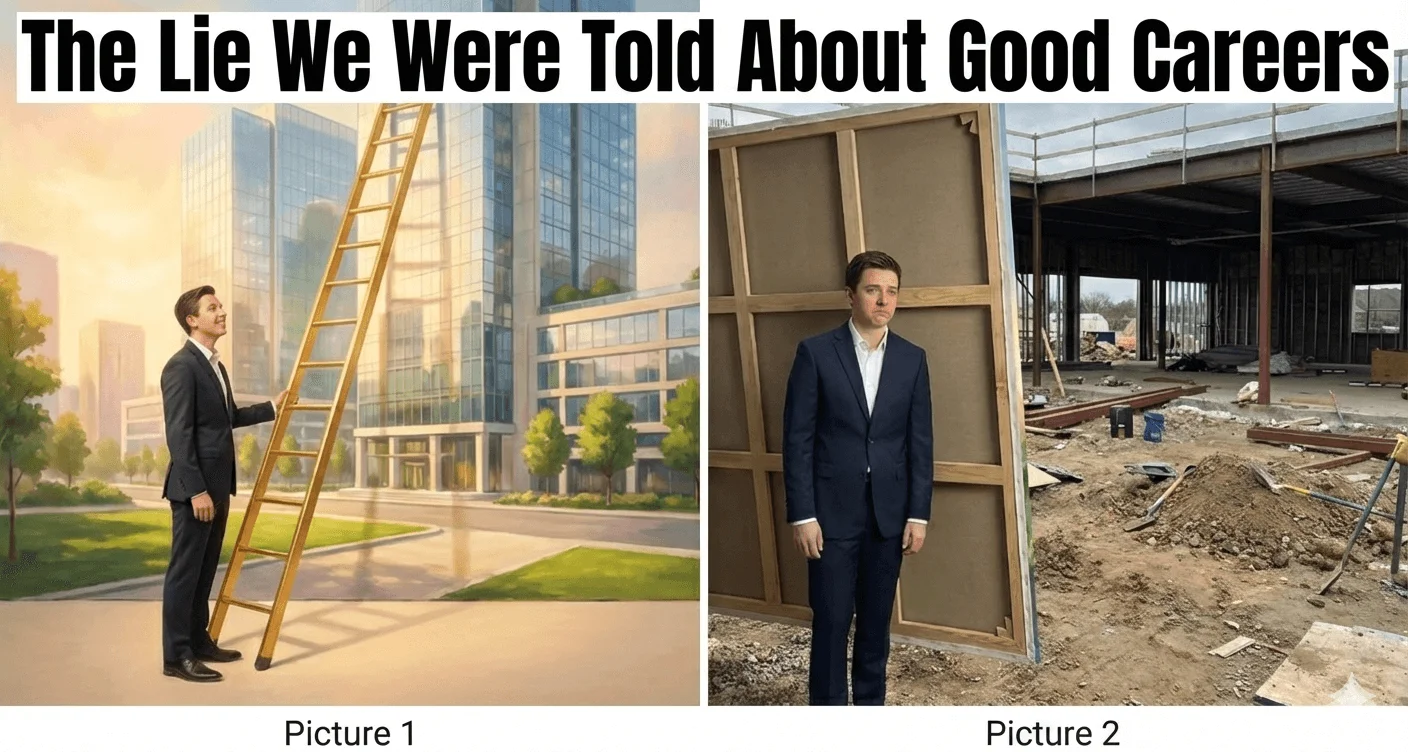
This rigid definition worked in a slower economy. It fails in today’s fast-changing world where technology, globalization, and automation constantly reshape work. Understanding good careers today requires moving beyond titles and focusing on adaptability, skill relevance, and long-term sustainability.
The Belief That Effort Alone Guarantees Good Careers
One of the strongest assumptions tied to good careers is the belief that they reward merit alone. Work hard, perform well, and success will follow.
Research consistently shows otherwise. Career outcomes are heavily influenced by access, networks, timing, and social capital. Modern career guidance and counselling focuses on system awareness rather than motivational slogans, showing that effort must be combined with strategy, visibility, and positioning.
Why Hard Work Alone Fails to Build Good Careers
Hard work is often mistaken for career strategy. Many professionals assume that effort naturally converts into promotions and growth. In reality, career advancement depends more on relevance than effort.
Skills that were valuable five years ago may no longer matter. Good careers are built by continuously aligning skills with market demand, not by exhausting oneself in the same role. This insight is critical for students and professionals seeking professional career consulting services.
Why ‘Do What You Love’ Can Mislead Your Career Decisions
Another assumption shaping poor career decisions is the belief that passion should lead career selection. While interest matters, passion without economic viability creates long-term stress. A more practical approach is to treat work as a platform enabling stability first, and fulfillment through growth over time.
Our professional career counseling services help individuals balance passion, skills, income, and opportunity rather than forcing a single narrative.
Loyalty and the False Promise of Career Security
Good careers were once associated with loyalty and long-term employment. Stay committed, and the organization will take care of you. That promise no longer exists. Organizations optimize for survival, not loyalty.
Modern good careers require ownership. Skills, networks, and reputation must belong to the individual, not the employer. This shift explains the rising importance of personal branding and structured career planning.
Why Careers Don’t Always Follow a Straight Path
Another damaging belief is that good careers follow a straight line: education, entry-level job, promotions, retirement. Today, careers are non-linear by design. People pivot industries, reskill mid-career, freelance, or combine multiple income streams.
When individuals cling to outdated career maps, they interpret normal change as failure. Career guidance services now emphasize flexibility, lateral growth, and transferable skills rather than fixed ladders.
Hidden Assumptions That Quietly Destroy Careers
Many careers stall not because of lack of ability, but because of unconscious beliefs. Some believe time served equals progress, even when skills are outdated. Others assume managers are responsible for their growth. Employers reward relevance, not tenure.
Degrees are also assumed to guarantee security. In reality, degrees without market-aligned skills offer limited protection. Recognizing these assumptions is essential for building resilient, future-ready careers.

What Actually Builds Good Careers Today
Modern research and career data point to clear patterns. Strong, diverse networks create access to opportunity. Self-awareness helps individuals choose paths aligned with their strengths. Strategic skill development keeps careers relevant. Comparative advantage, not generic competence, drives growth. Good careers are systems, not destinations.
Reframing Good Careers for Students and Professionals in Pakistan
In the Pakistani context, good careers must balance income, dignity, adaptability, and growth. Emerging good careers increasingly exist in technology, digital marketing, design, data, education services, and skill-based entrepreneurship. The right choice depends on alignment, not imitation.
Emerging Pathway: Professional E-Commerce
Build hands-on, remote-ready skills in catalog management, international store operations, and performance advertising.
See Our Professional E-Commerce Course →Academic & Literature References
-
1. Societal Pressure & Job Mismatch
Brown, P., Lauder, H., & Ashton, D. (2011). The Global Auction: The Broken Promises of Education, Jobs, and Incomes. Oxford University Press.
World Bank (2020). Skills for Jobs in Pakistan Report. -
2. Meritocracy Assumptions & Cultural Matching
Rivera, L. A. (2012). Hiring as Cultural Matching: The Case of Elite Professional Service Firms. American Sociological Review, 77(6), 999–1022.
Castilla, E. J. (2008). Gender, Race, and Meritocracy in Organizational Careers. American Journal of Sociology, 113(6), 1479–1526. -
3. Strategy vs. Hard Work Alone
Pfeffer, J. (1998). The Human Equation: Building Profits by Putting People First. Harvard Business School Press.
Chamorro-Premuzic, T., & Frankiewicz, B. (2019). Does Hard Work Really Pay Off? Harvard Business Review. -
4. Exposing the Passion Myth
Newport, C. (2012). So Good They Can’t Ignore You. Portfolio/Penguin.
Dweck, C. S. (2006). Mindset: The New Psychology of Success. Random House. -
5. Organizational Loyalty Shifts
Cappelli, P. (1999). The New Deal at Work: Managing the Market-Driven Workforce. Harvard Business School Press.
LinkedIn (2021). Workplace Trends Report. -
6. Non-Linear Professional Journeys
McKinsey & Company (2022). The Nonlinear Career Strategy.
World Economic Forum (2020). Future of Jobs Report. -
7. In-Demand Skills & National Strategy
Pakistan Ministry of Federal Education and Professional Training (2021). National Skills Strategy.
LinkedIn Workforce Report – Pakistan (2023).
Furqan Hassan
Founder & Lead Career Counselor at CareerNext.pk. Helping Pakistani professionals find high paying and remote jobs.