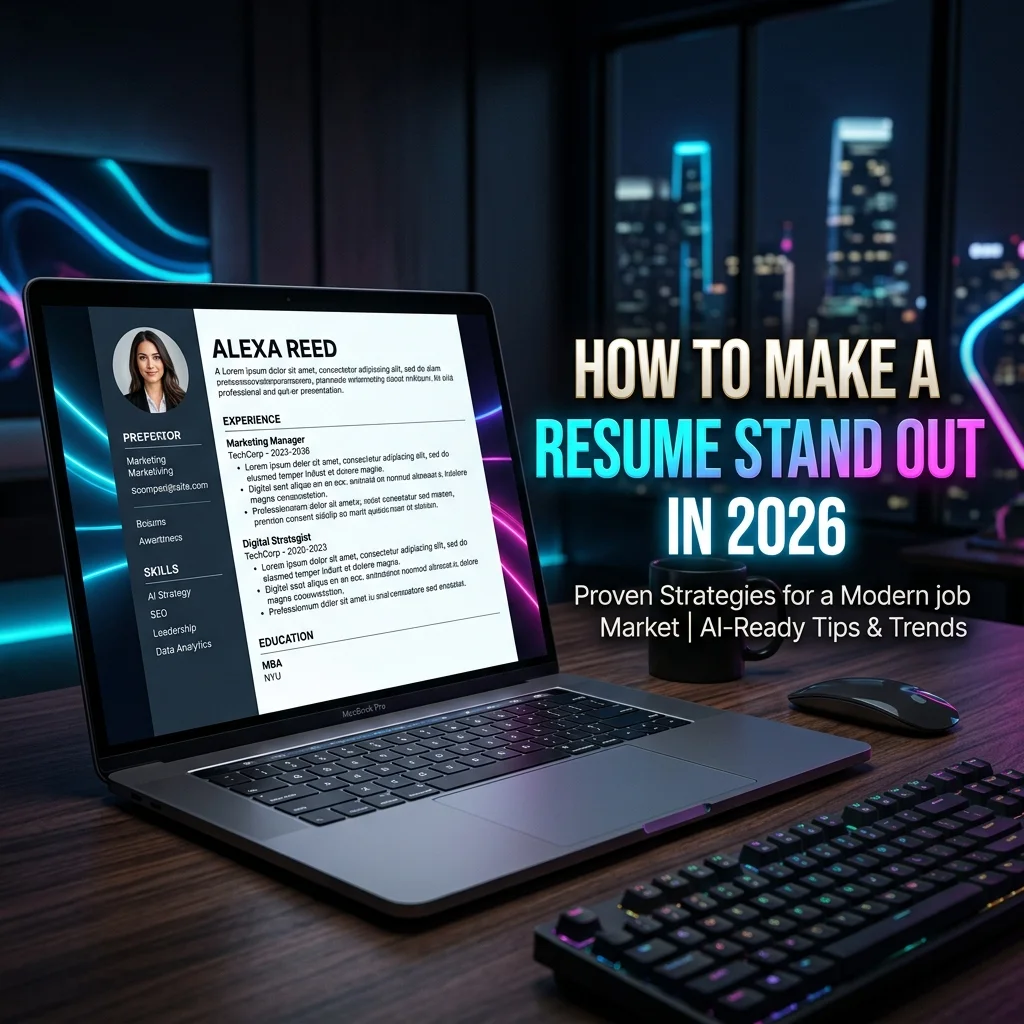
A resume that stands out in 2026 does one thing that most resumes fail to do: it survives two entirely different readers, one algorithmic and one human, without compromising for either. Get the structure right, and both the machine and the person behind it arrive at the same conclusion in under a minute. Get it wrong, and it does not matter how strong your career actually is — no one downstream ever sees it.
This guide sets out what the current evidence on hiring technology and recruiter behaviour actually shows, and translates that evidence into a resume structure you can build once and reuse with confidence.
1. The hiring landscape you're actually writing for
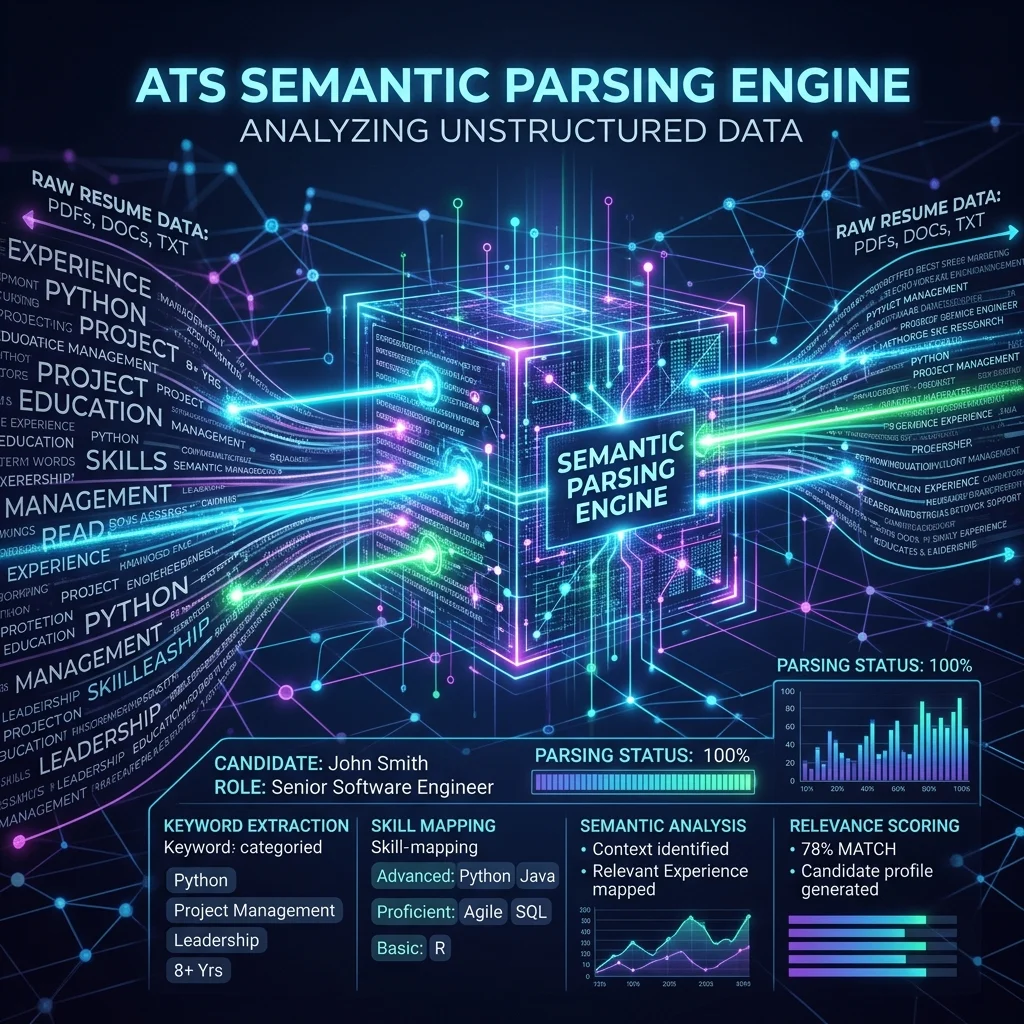
Resume screening used to be a manual bottleneck. Applicant Tracking Systems were built to relieve that bottleneck, and the earliest versions did so crudely, by matching exact keywords and discarding anything that didn't contain them. That era is largely over. Contemporary systems, including those built on transformer architectures similar in spirit to BERT and GPT-family models, construct a semantic embedding of your resume and compare it mathematically to the job description using techniques such as cosine similarity. The system is no longer asking "does this word appear," it is asking "how close is the underlying meaning of this candidate's experience to the meaning of this role."
The practical consequence is this: keyword stuffing is not just unnecessary, it works against you. A resume that repeats "project management" six times in a skills list, without ever demonstrating project management in an achievement statement, produces a weaker semantic match than a resume that uses the phrase naturally, twice, inside real accomplishments. Write for meaning, not frequency.
2. The six-second reality of human review
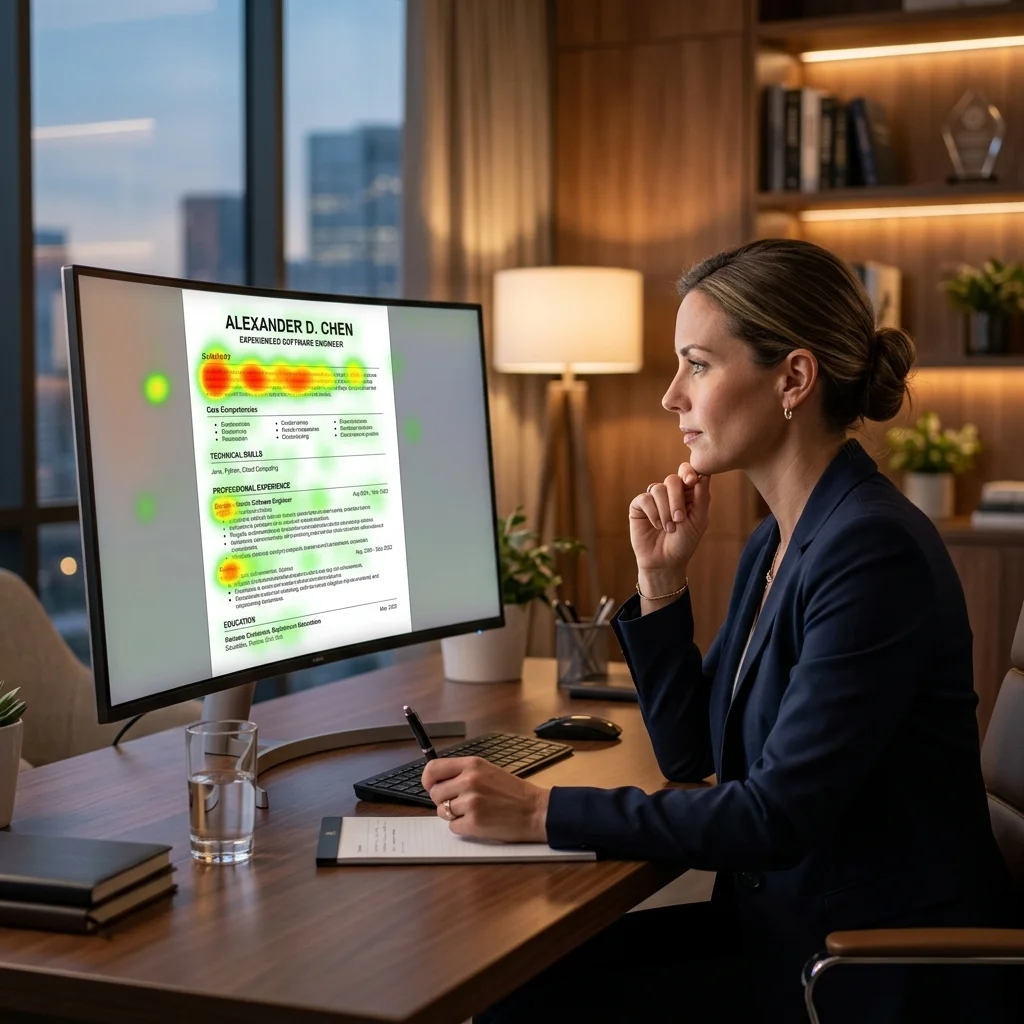
Even a resume that clears automated screening still has to survive a human being with very little patience. Eye-tracking research on recruiter behaviour consistently finds an average initial review time of around six seconds per resume, and in that window recruiters are not reading — they are fixing their gaze on a small number of specific data points: your name, your current title and employer, your previous title and employer, the dates attached to each, and your education.
Everything else on the page is scanned rather than read, mostly in search of keywords that match the open role. This has a direct design implication. Those data points must sit exactly where a trained eye expects to find them — top of the page, left-aligned or clearly labelled, in a consistent and predictable order. A resume that makes a recruiter hunt for a job title, even for two extra seconds, has already lost ground it cannot recover.
Why photos hurt more than they help
Eye-tracking heat maps on platforms that display profile photos show recruiters spending close to a fifth of their total review time looking at the photo rather than the experience section. On a document you control entirely, that is attention you cannot afford to give away.
3. Certainty, uncertainty, and how recruiters really decide
The research on recruiter decision-making describes two distinct modes of judgment, and understanding which one you are likely to trigger changes how you should prioritise your resume's content.
Under conditions of certainty — where a candidate obviously meets, or obviously fails to meet, the core requirements of the role — recruiters apply strict, non-compensatory rules. The decision rests entirely on the "relevant components": direct experience, education, and hard skills. No amount of formatting polish or an interesting hobby will rescue a resume that clearly lacks the required experience under this mode.
Under conditions of uncertainty — where a candidate is close but not a perfect match, perhaps a year short of the stated experience requirement — recruiters shift to compensatory reasoning. This is precisely where "formal components" (clean design, professional presentation) and "irrelevant components" (hobbies, volunteer work, extracurriculars) start to matter, because the recruiter is actively looking for additional evidence to justify a positive decision. If you suspect you are a borderline candidate for a role, this is the exact condition your resume should be built to win.
4. The anatomy of a resume that works on both readers
Every effective 2026 resume can be broken into three functional layers, and each layer needs a different kind of attention.
Relevant components
Your work history, education, and hard qualifications. These carry the most weight in both automated ranking and the six-second human scan, so they need to be unmistakably clear: correct chronology, consistent date formatting, and job titles that a recruiter can identify without pausing.
Formal components
The visual design itself — consistent fonts, clean spacing, and an absence of typos. This layer does the quiet work of reducing cognitive load, which research links to markedly better usability outcomes when a resume is well organised versus cluttered.
Irrelevant components
Hobbies, volunteer work, and personal interests. Low weight when a candidate is a clear match or a clear miss, but a genuine tie-breaker under uncertainty, since recruiters use them to infer interpersonal fit when the core qualifications alone don't settle the question.
5. Building an ATS-safe structure
Regardless of which enterprise system a company uses — Workday, Greenhouse, Lever, iCIMS, or another — the formatting rules that keep a resume parsing correctly are largely the same.
- File type: a single-column DOCX is the safest universal choice; a text-based PDF exported from Word or Google Docs is an acceptable second option.
- Layout: one column, no sidebars, no text boxes, minimal tables.
- Contact details: placed in the document body, never in a header or footer, which many parsers skip entirely.
- Fonts: standard system fonts such as Calibri, Arial, or Times New Roman.
- Section headings: conventional labels — "Experience," "Education," "Skills," "Summary" — that ATS dictionaries are built to recognise.
- Graphics: no icons, skill bars, charts, or photos on the ATS-facing version of your document.
6. Writing achievements that survive scrutiny
The single biggest quality gap between an average resume and a standout one is not formatting, it is the sentence-level writing inside each job entry. A duty statement tells a recruiter what you were assigned. An achievement statement tells a recruiter what changed because you did the work.
Weak: "Responsible for managing sales."
Strong: "Increased regional revenue by 37% in twelve months by redesigning the acquisition funnel and introducing targeted upsell campaigns."
Three frameworks make this kind of rewrite repeatable:
- XYZ: Accomplished X, as measured by Y, by doing Z.
- STAR: Situation, Task, Action, Result — on a resume, compress it down to Action and Result.
- CAR: Challenge, Action, Result — a tighter version of STAR suited to a single bullet line.
Aim for one to two lines per bullet, opening with a strong verb, naming the scope of the work, and closing with a concrete number. If a bullet has no metric in it, ask whether it belongs on the resume at all.
7. Keyword strategy without keyword stuffing
Because AI systems now evaluate contextual relevance, the correct place for a keyword is inside an achievement, not inside an isolated list. Pull the specific terms from the job description, include both the acronym and the spelled-out version where relevant (for instance, "CPA (Certified Public Accountant)"), and make sure each important term appears at least once naturally in either your summary, your top skills, or a relevant bullet. Repetition beyond that point stops adding signal and starts reading as manipulation, both to a human reader and to a semantic model trained to notice unnatural density.
8. Design and layout standards for 2026
Once the content is right, the visual layer either supports it or gets in its way. Keep margins between half an inch and one inch, use ten to twelve point body text with slightly larger headings, and restrict yourself to a single accent colour used sparingly for section headers. Multi-column layouts, while visually appealing in a design tool, remain one of the most common causes of scrambled chronology inside enterprise ATS software, so keep any heavily designed version for direct human distribution only, and maintain a plain, single-column version for every online application.
| Resume type | Design emphasis |
|---|---|
| Executive | Leadership impact, transformation initiatives, P&L metrics, up to two pages |
| Technical | Tech stack, project outcomes, simple text-first structure |
| Early career | Projects and coursework substituting for limited work history, one page |
9. Keeping LinkedIn and your resume aligned
Recruiters routinely cross-reference a resume against a candidate's LinkedIn profile, and increasingly do so through AI-assisted recruiter tools that summarise a profile automatically. Any mismatch in titles, dates, or employers between the two documents creates a credibility gap before an interview has even been scheduled. Keep a clean, customised LinkedIn URL in your resume header, match your history exactly across both, and use LinkedIn's greater space to add depth — recommendations, detailed project descriptions — that a one-page resume cannot hold.
10. The mistakes that quietly sink strong candidates
- Generic AI-written text: polished but vague language that reads identically across hundreds of applicants.
- Keyword stuffing: unnatural repetition that damages both readability and semantic scoring.
- Over-designed templates: multi-column, image-heavy exports that break automated parsing entirely.
- Duty-only bullets: descriptions of responsibility with no measurable outcome attached.
- Inconsistent narrative: a resume and LinkedIn profile that tell subtly different stories about the same career.
11. Frequently asked questions
What is the single most effective way to make a resume stand out in 2026?
Pair an ATS-safe, single-column structure with achievement-driven bullets that carry a real metric. Recruiters scan for six data points in about six seconds — name, current title and company, previous title and company, dates, and education — so those must be instantly readable, while every bullet beneath them should show a measurable result rather than a listed duty.
Do AI resume screeners actually read the whole resume?
Modern ATS platforms build a semantic embedding of your resume and compare it mathematically to the job description, rather than only scanning for exact keywords. This means your skills need to appear in context, inside real achievement statements, not just as an isolated list.
Should I use AI tools like ChatGPT or Gemini to write my resume?
AI tools are useful for drafting and tightening language, but recruiters increasingly recognise generic, over-templated AI phrasing. Use AI as an editing assistant, then rewrite the output in your own voice with specific, verifiable numbers so the document reads as authentic rather than mass-produced.
Is a PDF or a Word document better for ATS parsing?
A single-column DOCX file is the safest choice for enterprise systems such as Workday. A text-based PDF exported directly from Word or Google Docs is an acceptable second option, but design-tool exports often embed text in ways that ATS software cannot parse.
How long should a resume be in 2026?
One page is standard for early-career candidates, and one to two pages is standard for most professionals. The top third of page one still carries the greatest weight, since that is where both AI ranking systems and human recruiters focus first.
Do hobbies and personal interests belong on a resume?
They matter most when a recruiter is uncertain about your fit. If your core qualifications clearly meet or clearly miss the job requirements, hobbies have little influence — but for a borderline candidate, they can be a genuine tie-breaker.
Should a resume include a photo?
For US, UK, Canadian, and most multinational employers, no. Recruiters can spend close to a fifth of their review time looking at a photo instead of the experience section. Some local employers in the Gulf and parts of Asia still expect one, so tailor this to the specific market.