2026 Master Guide
Study in USA from Pakistan (2026 Guide)
Your ultimate roadmap covering Universities, Visas, Costs, Scholarships, and specialized Clinical Dentistry Licensure.
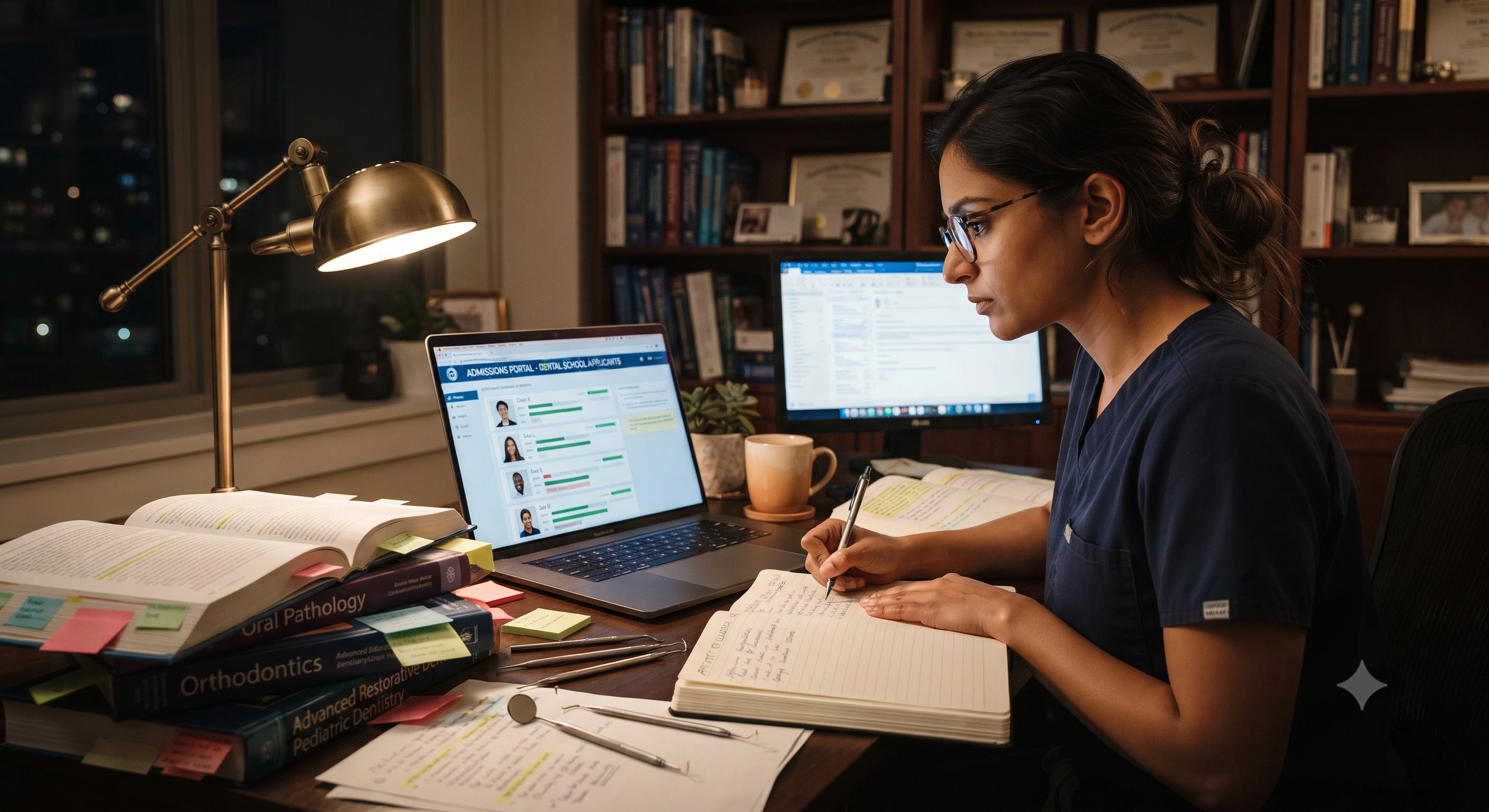
Your ultimate roadmap covering Universities, Visas, Costs, Scholarships, and specialized Clinical Dentistry Licensure.
Studying in the USA from Pakistan means clearing five stages — university selection, standardized testing, financial proof, F-1 visa approval, and SEVIS/Form I-20 compliance. Unlike centralized systems in other countries, the US higher education system runs on institutional autonomy, meaning deadlines, requirements, and aid policies vary by school.
Accredited Universities
STEM OPT Runway
SEVIS I-901 Fee
The United States remains the top destination for Pakistani students who want a globally recognized degree, access to research funding, and a direct route into Optional Practical Training (OPT) work experience after graduation. Unlike the UK, Canada, or Australia, the US system offers no centralized admissions body — instead, it runs on **institutional autonomy**, which means a student's success depends heavily on matching the right university type (public research university, private liberal arts college, or community college) to their budget and academic profile.
Three factors consistently draw Pakistani applicants to the US over other study-abroad destinations:
Pakistan's higher education system runs through the HEC (Higher Education Commission) with relatively standardized entry tests and degree structures (MBBS, BS, MS). The US has no equivalent central authority. Every university sets its own testing policy, its own deadlines, its own financial aid rules, and its own credential evaluation standards for foreign transcripts. This is the single biggest adjustment Pakistani applicants need to make mentally: there is no "one national exam" that determines admission everywhere.
Pakistani applicants generally fall into three buckets: those targeting **Ivy League / top-30 research universities**, those targeting **strong public universities with good STEM acceptance rates and scholarship availability**, and those starting through the **2+2 community college transfer route** to control cost. All three are legitimate, credible pathways.
| University | Testing Policy (2026–27) | Mid-50% SAT Range | Notable For |
|---|---|---|---|
| Harvard University | Required (SAT/ACT) | 1510–1580 | Need-blind aid for international students |
| Yale University | Required (SAT/ACT/AP/IB) | 1500–1570 | Need-blind aid, flexible testing |
| Princeton University | Test-optional through 2026–27 | 1510–1570 | Need-blind aid |
| MIT | Required (SAT/ACT) | 1530–1580 | Need-blind aid, engineering |
| Dartmouth College | Required (SAT/ACT) | 1490–1560 | Need-blind aid |
| Brown University | Required (SAT/ACT) | 1490–1560 | Need-blind aid |
| Cornell University | Required (SAT/ACT) | 1470–1550 | Strong engineering, agriculture |
| University of Pennsylvania | Required (SAT/ACT) | 1500–1570 | Business (Wharton), strong research |
| Columbia University | Test-optional through 2026–27 | 1490–1560 | Urban campus, strong grad programs |
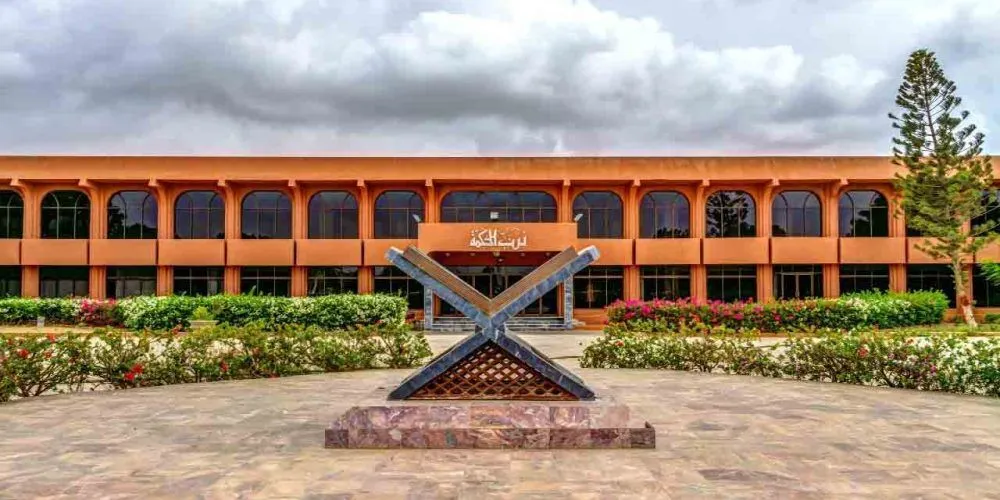
Pakistani students applying for engineering, computer science, and data-heavy programs frequently target public universities with good international acceptance rates and lower relative cost: **Purdue University, Arizona State University, University of Texas at Arlington, University of Illinois Urbana-Champaign, Michigan State University**, and select **University of California** campuses. These schools combine strong departmental rankings in STEM with more predictable, needs-aware (rather than needs-blind) admissions processes.
Students who complete FSc, A-Levels, or an equivalent secondary qualification in Pakistan can apply directly to four-year universities as freshmen. This route requires standardized testing (where required), English proficiency scores, transcripts, a Statement of Purpose, and recommendation letters.
For Pakistani families managing tight budgets, the **2+2 model** is the single most effective cost-reduction strategy in US higher education. Students complete the first two years of a bachelor's degree at a public community college, then transfer into a four-year university to finish the degree with the same final diploma.
| Factor | Direct Four-Year Entry | 2+2 Community College Route |
|---|---|---|
| Annual tuition | $20,000–$45,000+ | $3,000–$8,000 (first two years) |
| SAT/ACT required | Often yes, depending on school | Rarely required |
| Admission difficulty | Competitive, especially at top-50 schools | Open admission at most colleges |
| Final degree | Bachelor's from the four-year university | Identical bachelor's from the transfer university |
| Best for | Strong test scores, higher budget, want brand-name first two years | Budget-conscious families, students still building test scores |
Graduate applicants from Pakistan most commonly target **MS programs in Computer Science, Data Science, Artificial Intelligence, and Business Analytics** — fields with strong ROI and direct eligibility for the 24-month STEM OPT extension after graduation. Admission typically requires a GRE score (where required), a strong Statement of Purpose, letters of recommendation, and a minimum GPA from a four-year Pakistani bachelor's degree.
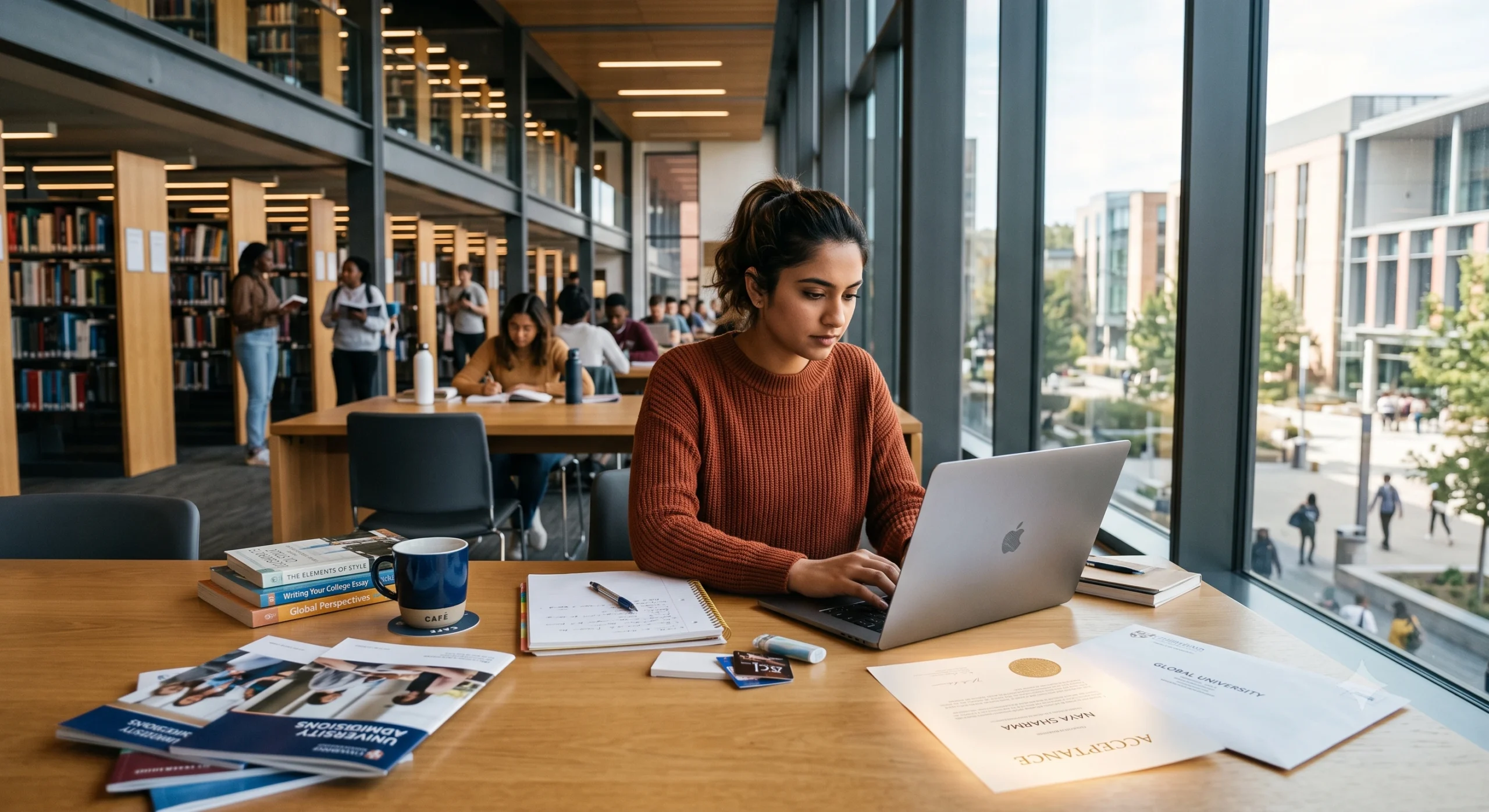
Applying to a US university requires gathering several critical documents and submitting them according to a structured timeline.
| Phase | Timing | What Happens |
|---|---|---|
| Research & Test Prep | July – September | Shortlist universities, book SAT/ACT/TOEFL/GRE slots |
| Early Action / Early Decision I | November 1–15 | Submit non-binding (EA) or binding (ED I) applications |
| ED II / Regular Decision opens | December – January | ED II submissions; Regular Decision window (Jan 1–15) |
| Decisions Released | March – April | Regular Decision results released |
| Enrollment Commitment | May 1 | Deposit deadline; "National Decision Day" |
Standardized testing policies are transitioning again in the US. While many schools went test-optional during the pandemic, top-tier institutions (Harvard, Yale, MIT, UPenn, Brown) have reinstated mandatory SAT/ACT requirements for the 2026–27 cycle.
For English proficiency, you do not necessarily need IELTS. Most US universities accept the **Duolingo English Test (DET)** and **TOEFL iBT** as complete substitutes.
| Test | Requirement (Selective Univ.) | Requirement (Regional Public Univ.) |
|---|---|---|
| TOEFL iBT | 90–100+ | 70–80+ |
| Duolingo English Test | 120–135+ | 95–105+ |
| IELTS | 7.0–7.5+ | 6.0–6.5 |
Understanding the Cost of Attendance (COA) is vital because you must prove to the US embassy and university that you have sufficient funds to cover your first year's tuition, housing, and insurance.
| Institution Type | Annual Tuition (USD) | Living Costs & Insurance |
|---|---|---|
| Community College (2+2 pathway) | $3,000 – $8,000 | $9,000 – $12,000 |
| Public Four-Year University | $20,000 – $30,000 | $10,000 – $15,000 |
| Private Non-Profit University | $30,000 – $45,000+ | $12,000 – $18,000 |
Pakistani students can access funding through three main options:
Since US federal loans (FAFSA) are unavailable to non-US citizens, international students often turn to specialized private lenders that do not require a US-based cosigner or collateral. Lenders like **MPOWER Financing** and platforms like **Nomad Credit** offer loans specifically to students admitted to accredited US programs.
After getting admitted, the immigration process begins. You will work with the university's Designated School Official (DSO) to receive your Form I-20 and apply for the F-1 visa.
Under **Section 214(b)**, US visa officers must legally assume you intend to immigrate permanently. You have 2 to 3 minutes to prove your primary goal is studying and that you have strong ties to return to Pakistan.
Red Flag: Scripted, over-coached answers. Do not recite memorized paragraphs. Keep your answers brief, concrete, and delivered in your own words.
F-1 students can earn money and gain valuable US work experience through three legal pathways:
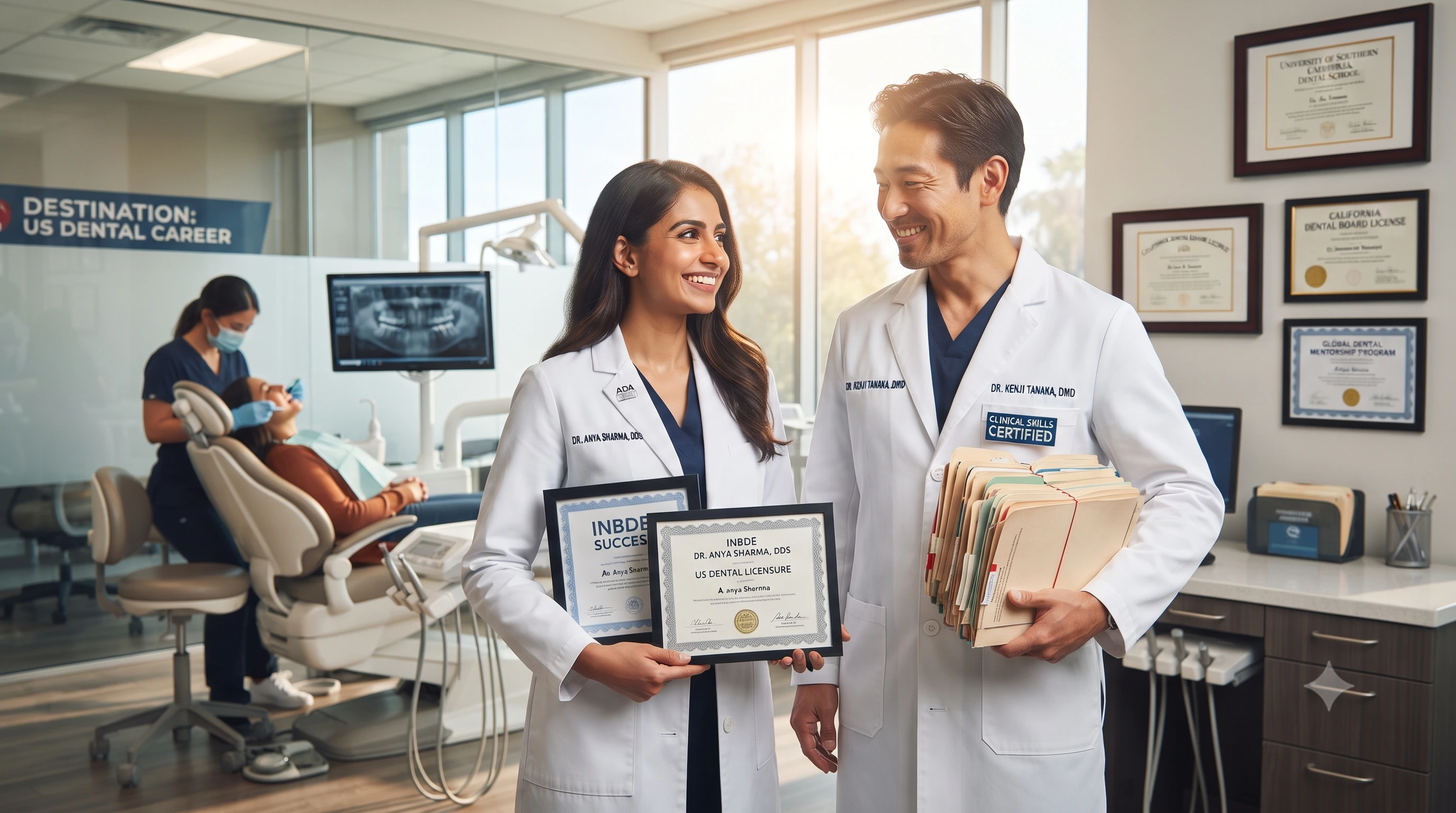
Can a Pakistani dentist become a licensed dentist in the USA? Yes. Pakistani dentists can become licensed in the United States, but a BDS degree alone is not enough. Most state boards require graduation from a CODA-accredited dental program.
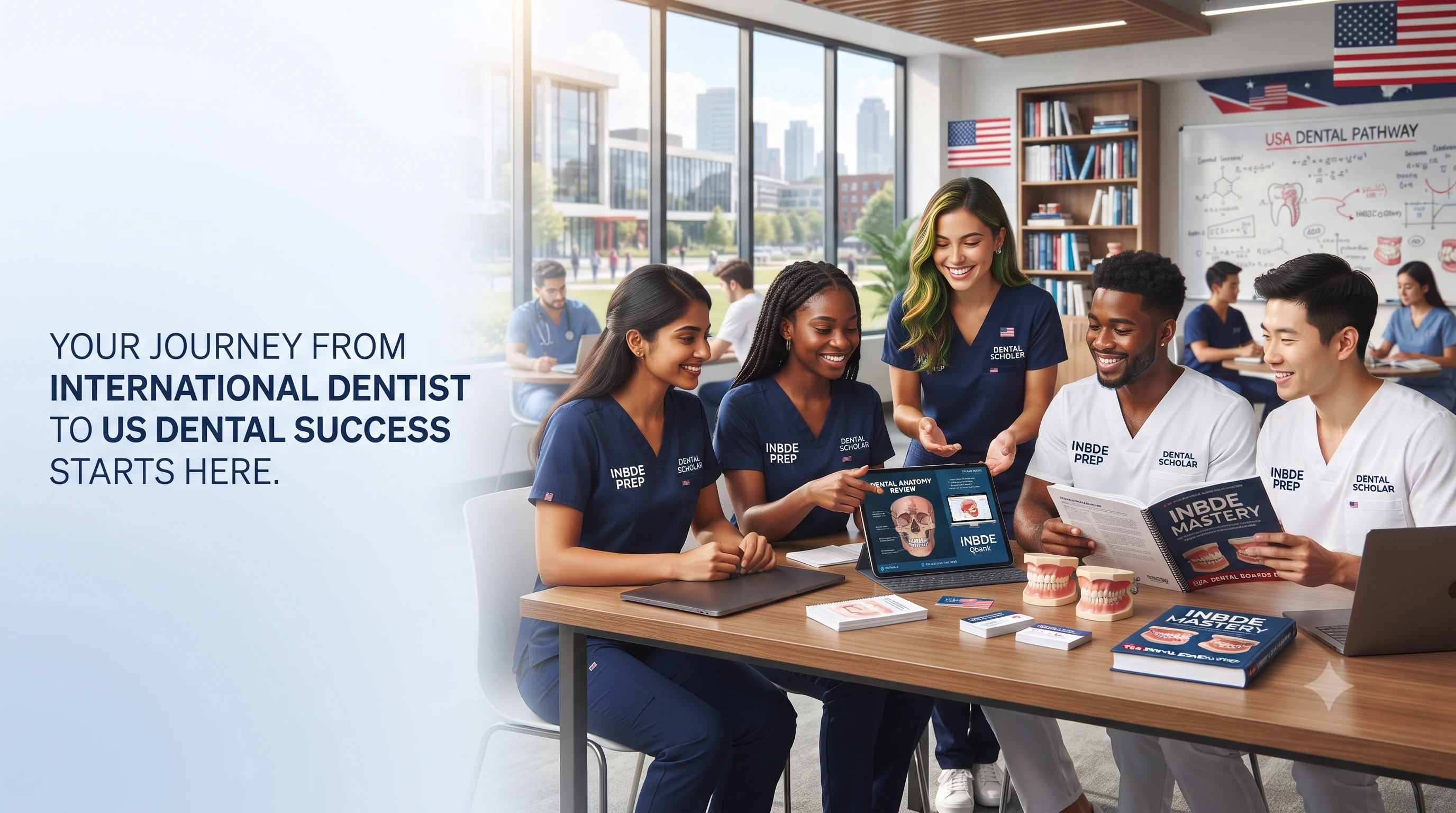
Pakistani-trained dentists typically complete credential evaluation, pass the INBDE, apply through ADEA CAAPID, gain admission into an advanced standing DDS or DMD program, finish clinical training, and meet state-specific licensing requirements. The pathway usually takes 3 to 6 years.
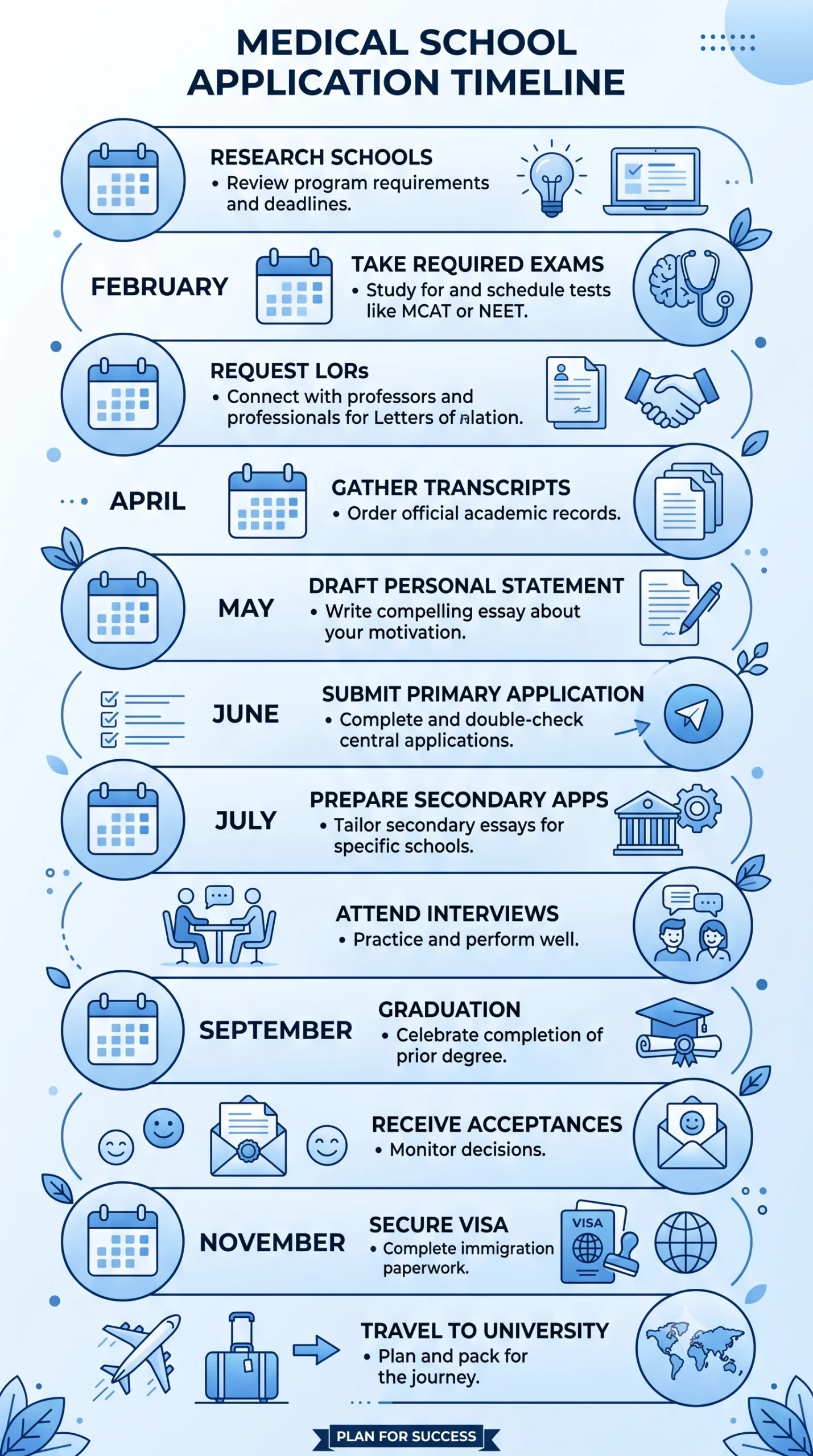
Working backward from the application deadline is key. Below is a realistic timeline for a Pakistani BDS graduate targeting advanced standing dental programs.
| Month | Milestone | Notes |
|---|---|---|
| Month 1–2 | Research schools & CAAPID-participating programs | Use the CAAPID Program Finder to shortlist. |
| Month 2–3 | Order ECE course-by-course credential evaluation | Takes 2–5 weeks once documents are submitted. |
| Month 2–4 | TOEFL/IELTS preparation and test | Check target school minimum scores. |
| Month 3–4 | Create DENTPIN and register for INBDE | Allow 3–6 months of prep time. |
| Month 4–7 | Take and pass the INBDE | Results typically available in 3–4 weeks. |
| Month 5–8 | Draft personal statement, CV, request letters | Start early — letters of recommendation take weeks. |
| Month 6–9 | Submit ADEA CAAPID application | Cycle runs March 5, 2026 – January 29, 2027. |
| Month 8–10 | School interviews and Bench Tests | Prepare separately for each school. |
| Month 10–12 | Admission decisions | Rolling admissions vary by program. |
| Month 11–13 | Apply for F-1 visa | Requires I-20 and SEVIS fee. |
| Month 12–14 | Enrollment begins | Advanced standing programs run 2–3 years. |
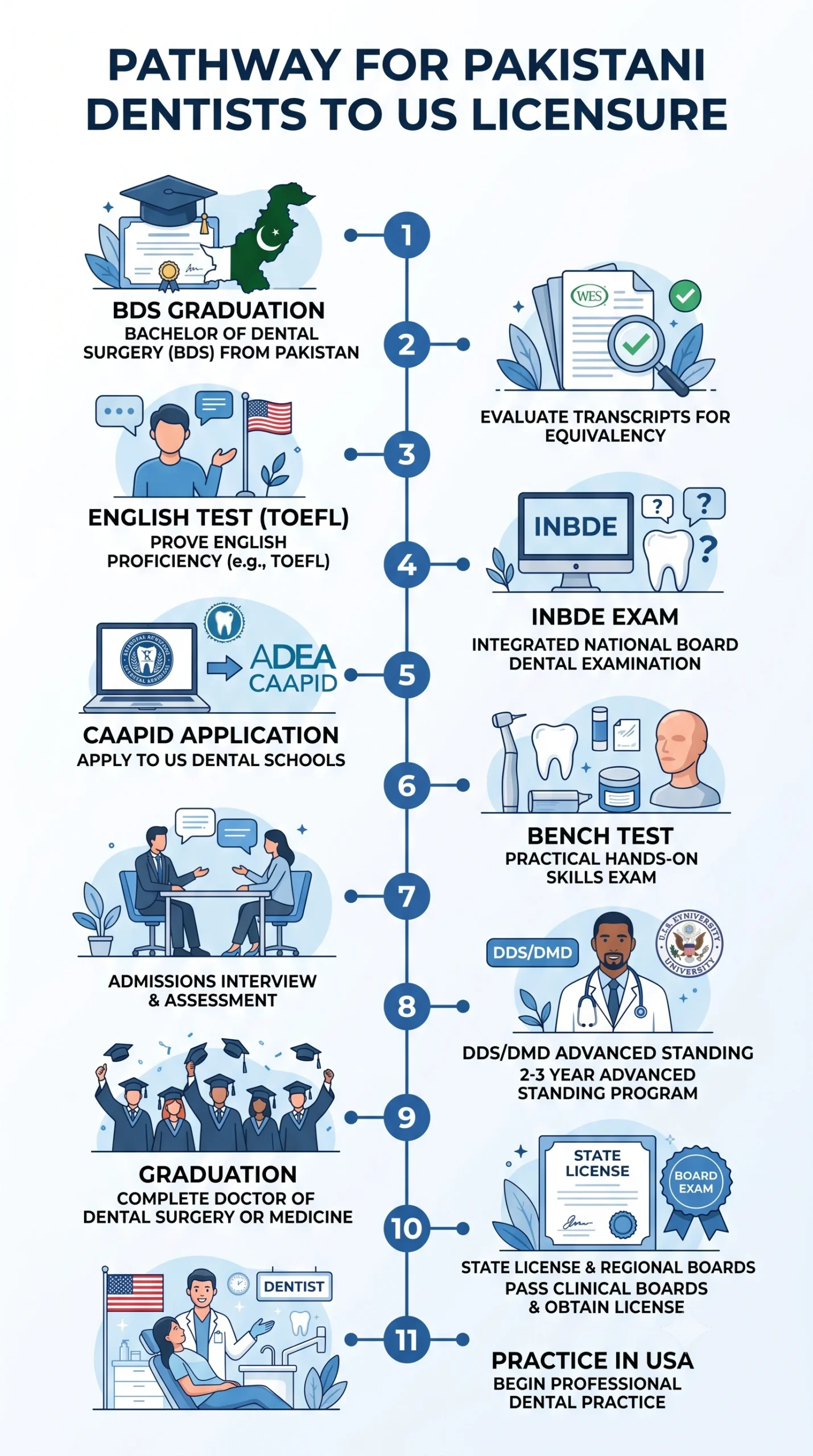
Advanced standing programs are accelerated 2-to-3-year curricula designed specifically for internationally-trained dentists, skipping the redundant early clinical years.
Get a course-by-course evaluation of your BDS credentials from a NACES-member agency (typically ECE).
Pass the TOEFL iBT meeting the minimum score required by your target schools.
Register for your unique identification number through the ADA website.
Pass the Integrated National Board Dental Examination (INBDE), which replaced the NBDE Part I & II.
Submit your profile during the cycle (runs March 5, 2026 to January 29, 2027). Fees: $264 first program, $115 each additional program.
Showcase your practical hand skills (restorations, preparations) and clinical reasoning.
Graduate from the 2-3 year program and pass your target state's clinical board exam (ADEX, WREB-CITA, etc.).
| Myth | Fact |
|---|---|
| A BDS from Pakistan is enough to practice in the U.S. | Most states require a CODA-accredited DDS/DMD. |
| INBDE and NBDE are the same exam. | INBDE officially replaced NBDE Part I/II in 2020. |
| Every dental school requires a Bench Test. | Bench Tests are school-specific. |
| All advanced standing programs use CAAPID. | Some programs are non-CAAPID. Always verify. |
| Any state accepts any clinical licensing exam. | Clinical exam acceptance varies significantly by state. |
*The tuition numbers below are reference four-year figures for standard DDS/DMD tracks. Advanced standing tuition is posted separately by each school and may differ. Always confirm advanced-standing-specific costs.
| Dental School | Resident Tuition (4-yr) | Non-Resident/Private Tuition (4-yr) | Note |
|---|---|---|---|
| University of California, San Francisco | $212,070 | $261,050 | Lower-cost public option. |
| University of California, Los Angeles | $231,162 | $280,142 | Moderate public tuition. |
| University of North Carolina, Chapel Hill | $152,273 | $286,445 | Large resident/non-resident gap. |
| University at Buffalo (SUNY) | $154,320 | $267,200 | One of the lower-cost public schools. |
| University of Michigan, Ann Arbor | $222,382 | $303,677 | Top-ranked, mid-range public tuition. |
| Harvard University | $277,200 | $277,200 | Private, flat tuition rate. |
| Tufts University | $378,792 | $378,792 | High-cost private. |
| Boston University | $384,304 | $384,304 | High-cost private. |
| Columbia University | $388,464 | $388,464 | High-cost private. |
| New York University | $411,392 | $411,392 | Among the most expensive. |
| University of Southern California | $437,481 | $437,481 | Highest in this sample. |
Compensation varies by state, practice setting, and experience. Check the current U.S. Bureau of Labor Statistics (BLS) Occupational Outlook Handbook for verified national salary figures. Typical career paths:
The United States Educational Foundation in Pakistan (USEFP) operates physical **EducationUSA** advising centers in physical locations in **Islamabad, Lahore, and Karachi**. They offer completely free, official advising for university application selection, visa guidelines, and pre-departure orientations.
For students looking for additional assistance, trusted agencies and application portals like **Yocket**, **AECC Global**, **Shorelight**, **Alfa Beta**, and **VisaPro** are frequently consulted for document preparation, profile evaluation, and mock visa interview training.
Navigating university applications, funding, and F-1 visa steps can be overwhelming. Get professional, custom guidance tailored to your specific profile and academic goals.
Career Advisor & Contributor at CareerNext.pk.
American Dental Association (ADA) | American Dental Education Association (ADEA) | Educational Credential Evaluators (ECE) | U.S. Student Visa Guidance
Get professional career guidance, resume reviews, and study placement guidance at our Karachi head office.
📍 Garden City, Scheme-45, Karachi, Pakistan
View Google Business Profile